Pentronic Type N Thermocouple
Brand: Pentronic
Product Type: Type N Thermocouple (Nicrosil–Nisil)
Key Features:
Thermocouple Composition:
Positive leg: Nicrosil (Nickel‑Chromium‑Silicon)
Negative leg: Nisil (Nickel‑Silicon‑Magnesium)
Temperature Range:
Continuous use: –270 °C to +1,300 °C
High stability up to approximately +1,280 °C for short durations
Sensitivity: ~39 µV/°C at 900 °C
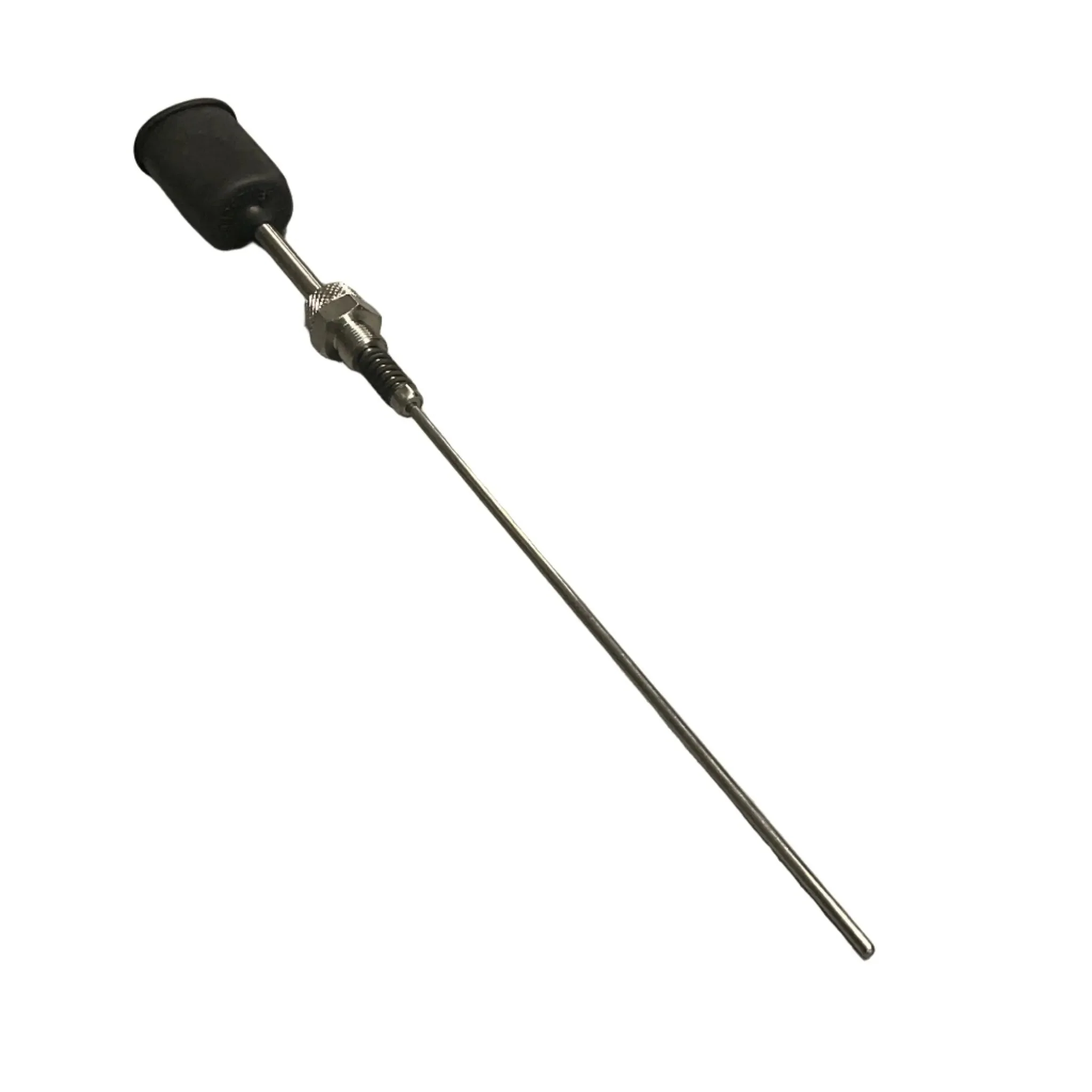
Probe Length: 165mm
Overall Length: 310mm
Superior Oxidation Resistance:
Enhanced long-term stability and improved repeatability in the 300–500 °C range due to alloy composition that resists drift from oxidation and transmutation
Calibration Standards and Tolerance (IEC 60584‑1 / BS EN 60584‑1 Part 8):
Standard Tolerance: ±2.2 °C or ±0.75% (whichever is greater)
Special Limits of Error (SLE): ±1.1 °C or ±0.4%
Typical Applications:
Ideal for demanding industrial uses such as heat treatment, process monitoring, research environments—especially where high-temperature stability is paramount
Original: $60.70
-70%$60.70
$18.21

Description
Brand: Pentronic
Product Type: Type N Thermocouple (Nicrosil–Nisil)
Key Features:
Thermocouple Composition:
Positive leg: Nicrosil (Nickel‑Chromium‑Silicon)
Negative leg: Nisil (Nickel‑Silicon‑Magnesium)
Temperature Range:
Continuous use: –270 °C to +1,300 °C
High stability up to approximately +1,280 °C for short durations
Sensitivity: ~39 µV/°C at 900 °C
Probe Length: 165mm
Overall Length: 310mm
Superior Oxidation Resistance:
Enhanced long-term stability and improved repeatability in the 300–500 °C range due to alloy composition that resists drift from oxidation and transmutation
Calibration Standards and Tolerance (IEC 60584‑1 / BS EN 60584‑1 Part 8):
Standard Tolerance: ±2.2 °C or ±0.75% (whichever is greater)
Special Limits of Error (SLE): ±1.1 °C or ±0.4%
Typical Applications:
Ideal for demanding industrial uses such as heat treatment, process monitoring, research environments—especially where high-temperature stability is paramount